The Next Leap for Power BI: How Power IQ Turns Dashboards into Decision Engines

The Next Leap for Power BI: How Power IQ Turns Dashboards into Decision Engines


Share this post

The Next Leap for Power BI: How Power IQ Turns Dashboards into Decision Engines

For years, Power BI has helped organizations visualize data. But as enterprises evolve, visualization alone isn’t enough. Leaders want systems that interpret, predict, and advise — not just report.


1. From BI to Decision Intelligence
Traditional dashboards answer “What happened?” — but Power IQ goes further: “Why did it happen, and what’s next?”
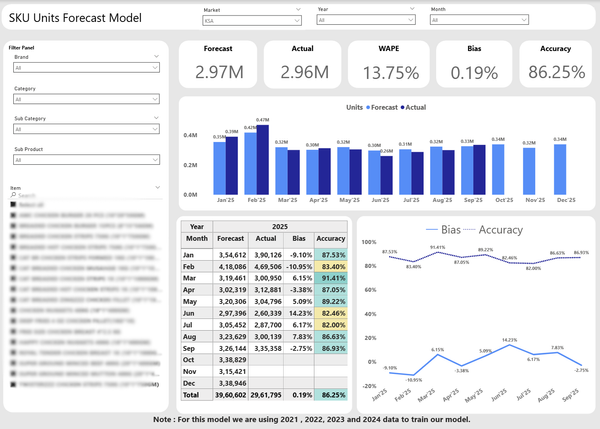
By integrating machine learning directly into your Power BI semantic model, you can forecast, detect anomalies, and receive smart alerts without leaving your dashboard.

2. The Power IQ Framework
Power IQ sits on top of your existing BI stack. It connects data models, applies ML forecasting, and creates contextual insights using business rules and thresholds.
Think of it as your in-house data analyst, embedded within Power BI.

3. For Companies with or without Data Warehouse

  • Already built your Data Warehouse? Power IQ enhances it with predictive analytics.
  • Still building? We create your end-to-end pipeline, semantic model, and KPI framework — ready for scale.

4. Real-World Applications

  • Predict P&L trends and detect anomalies.
  • Optimize supply chain operations.
  • Improve marketing ROI through campaign intelligence.
  • Identify at-risk customers before they churn.

5. Why Netision
Our strength lies in domain knowledge + data engineering. We understand the business context behind the numbers — across Retail, QSR, Banking, and Manufacturing.

Conclusion:
Power IQ isn’t another dashboard. It’s how enterprises make Power BI think — and leaders decide faster.


Share this post

Comments
The Energy Sector’s Data Problem

The Energy Sector’s Data Problem

Introduction: The Energy Sector’s Data Problem The energy sector—spanning oil & gas, renewables, utilities, and power distribution—is one of the most document-intensive industries in the world. Every process, from exploration to refinery operations, regulatory compliance, or ESG reporting, generates massive volumes of unstructured text data — contracts, manuals, inspection logs, environmental statements, and policy reports. Yet, over 70% of this information remains trapped in PDFs, scanned ima

The Rise of the Machines (Learning): Why LLMs are Key to Future Applications

The Rise of the Machines (Learning): Why LLMs are Key to Future Applications

Large Language Models (LLMs) are rapidly evolving from research curiosities to essential building blocks for a wide range of applications. Their ability to understand, generate, and manipulate human language at scale is unlocking unprecedented opportunities for innovation across various industries. This blog post will explore why LLMs are poised to become a key component of the upcoming generation of applications, transforming how we interact with technology and the world around us. Natural La

Demand Forecasting Strategy: Master Key Influencing Factors for Accurate Predictions

Demand Forecasting Strategy: Master Key Influencing Factors for Accurate Predictions

In today’s volatile markets, demand forecasting is no longer a support function—it’s a strategic differentiator. Organizations that align demand signals with real-world drivers like seasonality, competitor pricing, weather and promotions consistently outperform their peers in supply planning, inventory allocation and revenue management. At Netision, we’ve found that forecasting accuracy improves not through better algorithms alone, but by integrating smarter factors. Below, we outline a four-st

How to Supercharge Your AI with Knowledge Graphs & LLMs: A Step-by-Step Guide

How to Supercharge Your AI with Knowledge Graphs & LLMs: A Step-by-Step Guide

How Language Models and Knowledge Graphs Work Together Ever ask how systems like Siri or ChatGPT can accurately relate facts—such as “Elon Musk founded SpaceX and leads Tesla”? The key lies not only in language models but in integrating knowledge graphs to provide structure and reliability. What Is a Knowledge Graph? A knowledge graph organizes entities and their relationships into subject–predicate–object triplets. For example: (Steve Jobs) — [founded] → (Apple Inc.) This structure lets s

ссс