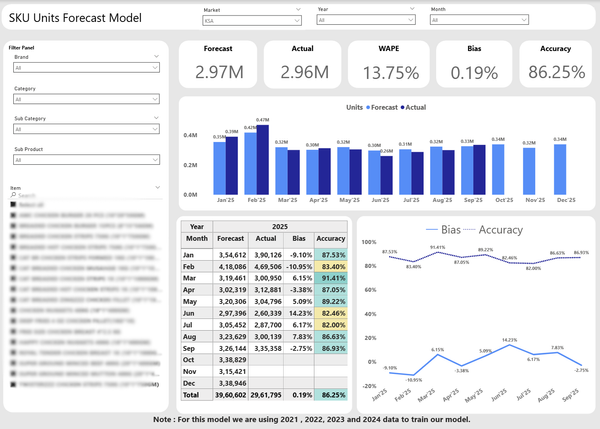
Sales forecasting is a critical process for enterprises looking to drive sustainable growth, optimize resource allocation, and improve decision-making. By predicting future sales performance, businesses can prepare for market fluctuations, enhance operational efficiency, and align strategic goals. Here’s why sales forecasting is necessary and how enterprises can leverage it effectively.
Why Sales Forecasting Matters
- Strategic Planning and Decision-Making Sales forecasting provides a roadmap for businesses, helping leaders set realistic targets, allocate resources efficiently, and plan investments wisely.
According to Harvard Business Review, data-driven forecasting enhances decision-making and drives revenue growth.
- Optimized Inventory Management Accurate forecasts prevent overstocking or stockout, ensuring that supply chain operations run smoothly and inventory costs remain under control.
According to McKinsey & Company, AI-driven demand forecasting can reduce inventory errors by up to 50%, leading to significant improvements in supply chain efficiency and working capital optimization.
- Better Financial Planning Sales forecasts enable businesses to estimate revenue, manage cash flow, and make informed budgeting decisions.
According to Deloitte, accurate forecasting enables CFOs to drive more effective financial strategies by improving budget planning, risk assessment, and capital allocation.
- Enhanced Workforce Management Enterprises can plan hiring and training initiatives based on expected demand, ensuring that sales and customer service teams are adequately staffed.
According to Gartner, predictive analytics enhances workforce efficiency by anticipating future sales trends, allowing businesses to better align staffing, training, and operational planning with demand.
- Improved Risk Management By anticipating potential downturns or surges, businesses can develop contingency plans and mitigate financial risks effectively.
According to Forbes, advanced sales forecasting helps businesses proactively manage risks and seize opportunities.
Introducing Navtics: The Future of Sales Forecasting
Navtics is an advanced sales forecasting solution that takes signals from multiple resources, including market trends, customer behavior, and historical sales data, to provide highly accurate and AI-driven predictions. By integrating data from various sources, Navtics empowers enterprises with real-time insights to drive growth and efficiency.
Types of Sales Forecasting Models
Navtics leverages sophisticated predictive models that ensure high accuracy and adaptability to market trends. Some of the key types of forecasting models include:
- Time-Series Models – Analyze historical data patterns to predict future trends.
- Machine Learning Models – Use AI-driven algorithms to refine predictions based on dynamic data inputs.
- Causal Models – Integrate external factors like economic indicators, market shifts, and customer behaviors to enhance forecasting accuracy.
- Hybrid Models – Combine multiple approaches for a more comprehensive prediction mechanism.
Navtics employs a specialized forecasting model that blends these techniques to ensure highly reliable and actionable insights for enterprises.
How Navtics Benefits CMOs and CFOs
- For CMOs (Chief Marketing Officers):
- Gain precise insights into market demand and customer behavior.
- Optimize marketing campaigns with data-driven decision-making.
- Enhance lead generation and improve conversion rates.
- Allocate budgets effectively for maximum ROI.
- For CFOs (Chief Financial Officers):
- Achieve accurate revenue forecasts to improve financial planning.
- Identify financial risks and develop proactive mitigation strategies.
- Streamline budgeting and investment decisions based on data-driven insights.
- Ensure alignment between sales projections and business objectives.
Key Use Cases of Sales Forecasting
1. Demand Forecasting for Retail & E-commerce
Retailers and e-commerce businesses rely on sales forecasting to predict demand trends, ensuring optimal stock levels and efficient supply chain management. For example, seasonal demand spikes during holidays can be anticipated using predictive analytics.
2. Revenue Forecasting for SaaS and Subscription Businesses
Subscription-based businesses use sales forecasts to predict recurring revenue, assess customer churn rates, and optimize pricing strategies to maximize profitability.
3. Production Planning for Manufacturing
Manufacturers leverage sales forecasting to plan production schedules, align procurement with demand, and minimize wastage.
4. Sales Performance Tracking for Enterprises
Enterprises use forecasts to set sales quotas, track team performance, and adjust sales strategies to meet targets effectively.
5. Investment & Expansion Planning for Financial Services
Financial institutions and investors depend on sales forecasts to evaluate market opportunities, assess risk levels, and make strategic expansion decisions.
6. AI-Driven Predictive Analytics for B2B Sales
B2B enterprises use AI-powered sales forecasting models to analyze historical data, identify sales trends, and enhance lead conversion rates.
Final Thoughts
Sales forecasting is a powerful tool that empowers enterprises to make data-driven decisions, reduce uncertainties, and drive sustainable business growth. By leveraging Navtics, businesses can enhance forecasting accuracy, stay ahead of market trends, and gain a competitive edge in their industry. Whether in retail, manufacturing, SaaS, or finance, Navtics provides the intelligence needed for long-term success.
Would you like to explore how Navtics can transform your business? Netision Experts are here to help you.