The Costly Mistake of Ignoring Data Policy
In today’s data-driven economy, businesses are pouring millions into AI, analytics, and cloud infrastructure—yet many still lack a fundamental component: a well-defined data policy.
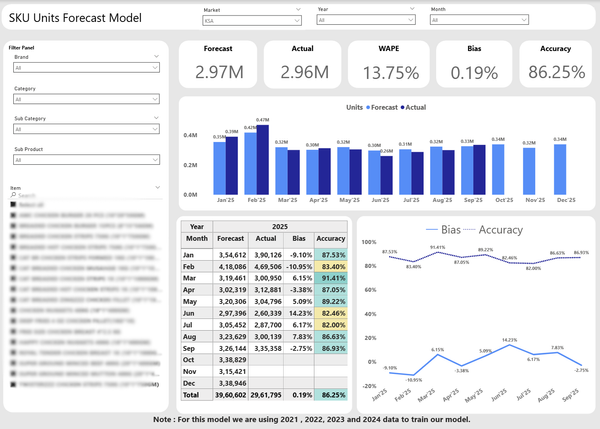
Imagine an enterprise investing heavily in customer analytics but failing to collect mobile numbers or unique customer IDs. Or a CPG company building forecasting models without tracking promotional dates and spend. In both cases, critical insights are lost, and the return on investment diminishes.
Without a structured data policy, even the most ambitious data strategy is bound to collapse under the weight of inconsistent, incomplete, or inaccessible data.
What Happens When Data Policy is Missing?
1. Customer Data: The Missing Link
Scenario: A national retailer implements AI-driven customer analytics but fails to capture unique customer IDs across online, offline, and mobile channels.
Outcome: The same customer is registered as multiple entities, resulting in fragmented insights and ineffective personalization.
Lesson: A robust data policy ensures consistent customer identification and seamless cross-channel engagement.
2. Sales Forecasting Without Promotional Data
Scenario: A consumer goods company builds advanced forecasting models but neglects to store promotion dates and budgets.
Outcome: The model misinterprets sales spikes as organic, compromising accuracy.
Lesson: Forecasting without complete context is unreliable. A data policy ensures essential business signals are captured and retained.
3. Supply Chain Chaos from Poor Data Governance
Scenario: A global manufacturer lacks standard naming conventions for SKUs across ERP and inventory systems.
Outcome: Redundant procurement and misaligned inventory planning lead to excess costs and inefficiencies.
Lesson: A data policy enforces standardized taxonomy, critical for smooth supply chain operations.
4. Ineffective Personalization in Marketing
Scenario: A streaming platform wants to personalize content but lacks consistency in capturing watch history and user preferences.
Outcome: AI-driven recommendations miss the mark, reducing customer satisfaction.
Lesson: Personalization requires structured, high-quality behavioral data, governed by clear data policies.
5. Financial Mismanagement from Data Silos
Scenario: A multinational bank stores customer financial data across multiple, disconnected systems.
Outcome: Loan processing slows down, fraud detection lags, and customer experience suffers.
Lesson: A unified data policy enables real-time data access, reducing risk and improving financial performance.
6. Healthcare Inefficiencies Due to Fragmented Records
Scenario: A hospital network lacks policies for standardized patient records across departments.
Outcome: Doctors operate with incomplete data, risking errors and redundant testing.
Lesson: In healthcare, a sound data policy ensures interoperability, safety, and efficiency.
Core Components of a Strong Data Strategy
A comprehensive corporate data strategy must rest on these pillars:
- Data Governance – Clear roles, responsibilities, and policies for data management
- Data Architecture – Structured design for how data is stored, processed, and accessed
- Data Quality Management – Ensures data is accurate, complete, and consistent
- Data Security & Compliance – Alignment with regulations such as GDPR and CCPA
- Data Analytics & Insights – Enable informed decisions using AI, ML, and BI tools
- Data Integration & Interoperability – Seamless data exchange across systems
- Data Monetization – Converting data into a strategic business asset
Why Data Policy Is the Foundation of Data Strategy
No matter how advanced your tools or models are, success depends on how well your data is governed. A data policy ensures:
- Data Completeness – Capturing all relevant fields (e.g., customer ID, promotion history, transaction details)
- Data Consistency & Accuracy – Standardizing names, formats, and validation rules
- Access Control & Compliance – Secure, role-based access aligned with privacy laws
- Usability & Readiness – Structuring data to support analytics, reporting, and AI use cases
Final Thoughts: Don’t Let Data Slip Through the Cracks
An organization can invest billions in AI and analytics—but without a solid data policy, the insights never materialize. It’s like building a spacecraft without an engine—the mission fails before it starts.
- A strong data policy transforms raw data into competitive advantage
- It eliminates waste, enhances operational agility, and unlocks business value
Data is gold—but only if it’s governed.
Align Your Business Strategy with a Data Strategy That Works
To ensure your data initiatives support business goals, speak to a Netision expert. Use our Data Strategy Canvas to design a structured, scalable, and actionable data roadmap for your organization.
Let’s turn your data into a strategic weapon—before your competitors do.
Would you like to explore how Navtics can transform your business? Netision Experts are here to help you.